Friends,
The threat of fraud is growing and the schemes are evolving. No longer is it just an obvious scam email full of typos asking you to wire money to a stranger. Today it's a hacked school district email account. It's an AI-generated voice on the phone that sounds exactly like your grandson. It's someone you met online who spends months building a relationship with you before asking you to invest your savings.
This is not some far-off problem. Last year, a school district right here in Arkansas was tricked into wiring $3.2 million to criminals posing as a construction contractor. Nationally, Americans reported losing nearly $16 billion to fraud and scams in 2025 alone, and because most victims never report what happened to them, the real number is likely far higher.
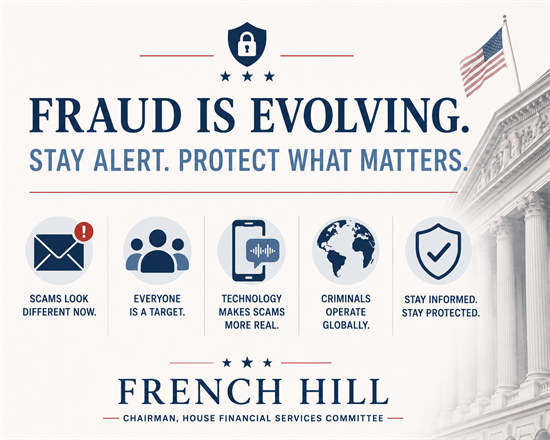
Every American is a target. Our seniors remain a favorite target for criminals, but young people are increasingly just as vulnerable, and reported losses among Americans in their twenties are rising fast.
Artificial intelligence has made these criminals far more dangerous. They can now clone a loved one's voice, generate a fake video realistic enough to fool a company's finance department into wiring money, and write messages with none of the spelling mistakes that used to give scams away. That means anyone, of any age or background, can be targeted and fooled.
Technology has also closed the distance. Much of this activity is no longer run by lone scammers working out of a basement. Criminal organizations, many operating out of scam centers in Southeast Asia, have turned fraud into an industrial-scale business, relying on as many as 300,000 trafficked workers to run these schemes around the clock. Encrypted messaging apps let these criminals hide from law enforcement while reaching billions of potential victims at once, giving them a global staging ground with almost no risk of getting caught.
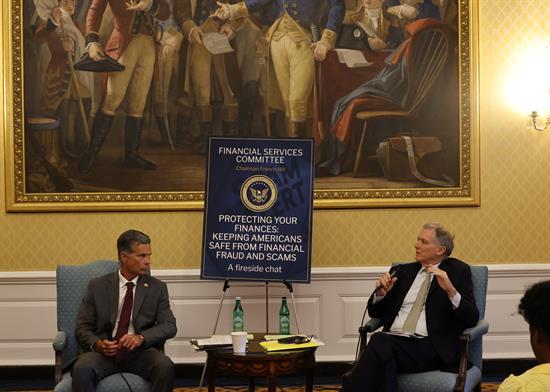
As Chairman of the Financial Services Committee, I have made combating this threat a top priority.