|
WASHINGTON, D.C. — The new Ranking Member of the House Financial Services Subcommittee on National Security, International Development and Monetary Policy, Congressman French Hill (AR-02), joined Congressman Emanuel Cleaver (MO-05) in leading a House Financial Services Subcommittee hearing entitled, "How America Leads Abroad: An Examination of Multilateral Development Institutions".
This hearing focused on assessing the U.S. Department of Treasury's request for Congressional authorization to increase the amount of capital given to the World Bank Group. Congressman Hill highlighted the importance of ensuring that the World Bank and other multilateral development banks are using U.S. resources in a transparent, corruption-free, and effective manner before committing U.S. taxpayer funds to these institutions.
Watch Congressman Hill’s opening remarks from the hearing HERE or by clicking on the image below.
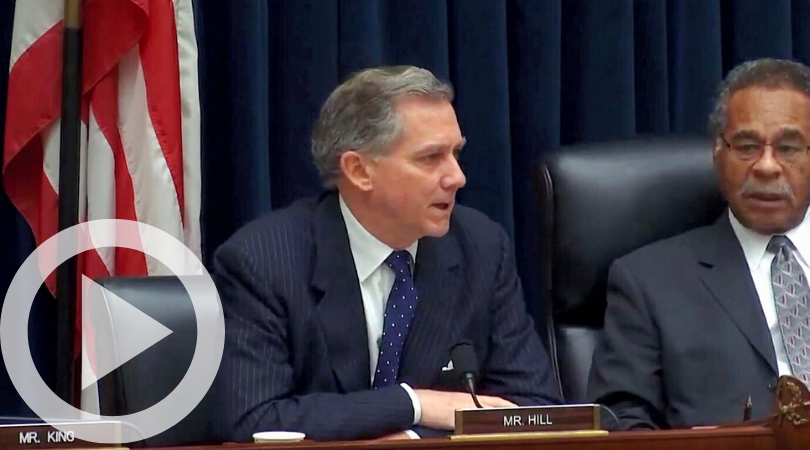
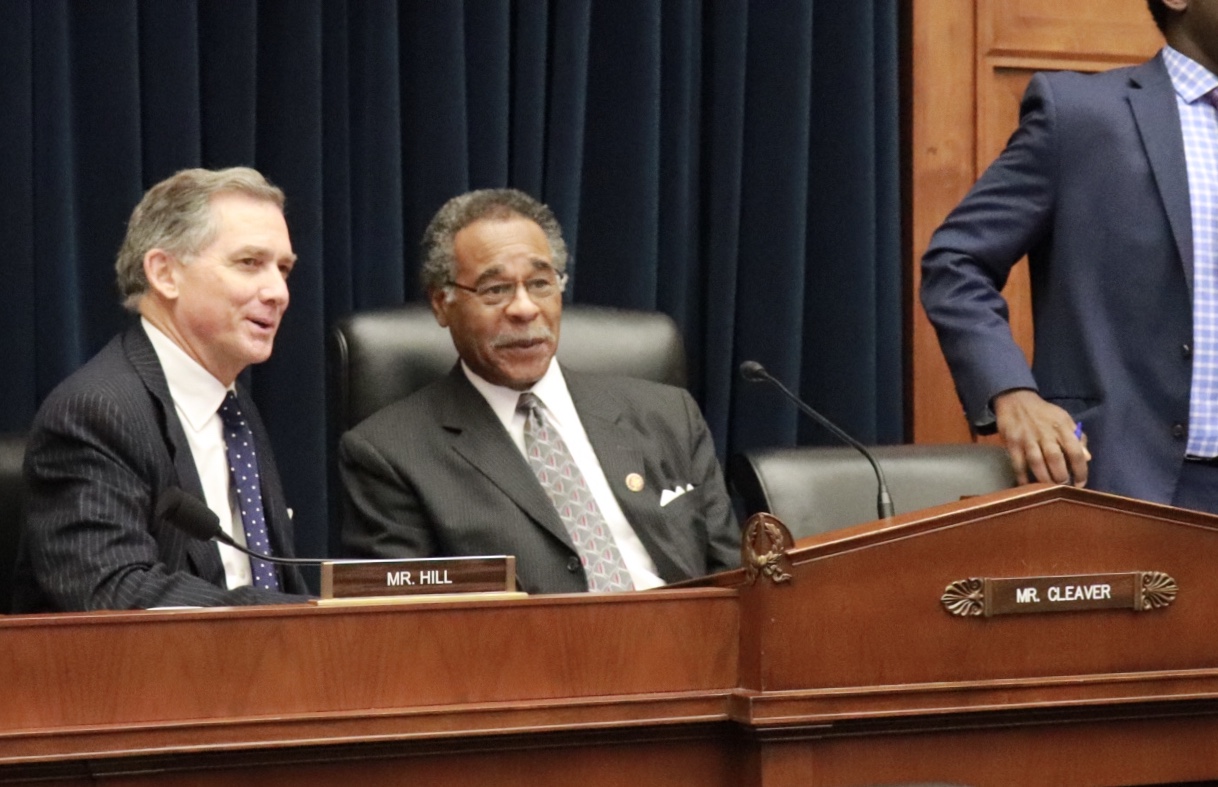
Congressman French Hill (AR-02), joins Congressman Emanuel Cleaver (MO-05) in leading the
Financial Services Subcommittee on National Security, International Development and
Monetary Policy.
 |
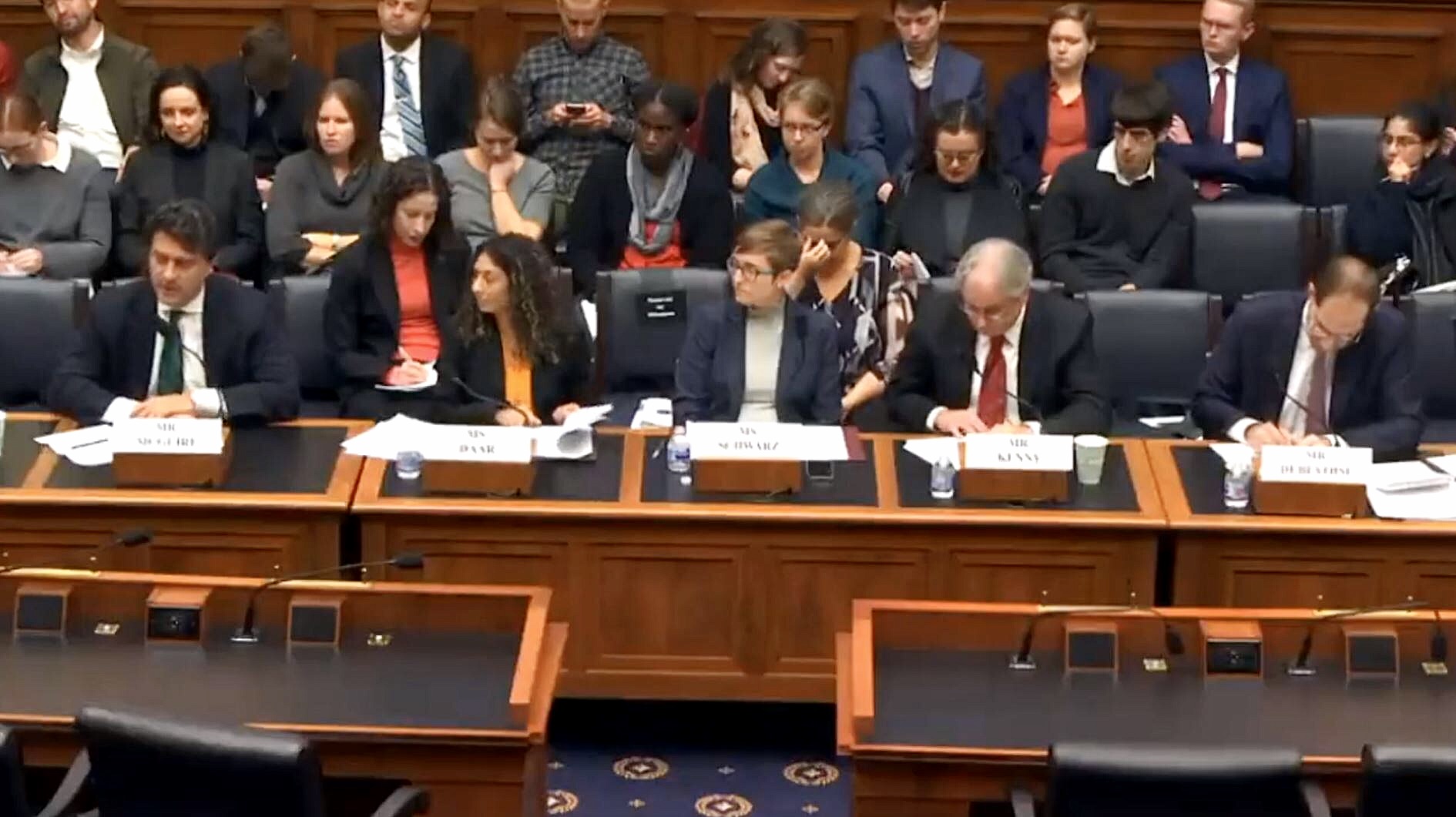
Pictured below: Witnesses who participated in Wednesday's hearing included: Charles Kenny,
Senior Fellow, Center for Global Development; Nadia Daar, Head of Washington DC Office,
Oxfam International; Jolie Schwarz, Policy Director, Bank Information Center; Matthew
McGuire, Vice Chairman, CapZone Impact Investments; Eli Whitney Debevoise II, Partner,
Arnold & Porter
 |
Highlights of Congressman Hill's remarks as prepared are copied below.
Since 1945, the World Bank has been supporting low- and middle-income countries by providing access to financing to alleviate poverty and promote economic development. Over that time, the United States has approved capital increases four times: 1959, 1979, 1988, and 2010. This is the fifth time an administration is seeking Congressional approval for a capital increase.
The Trump Administration has proposed an additional paid in capital $1.2 billion for the [International Bank for Reconstruction and Development] and $5.5 billion for the International Finance Corporation--both would be financed by other countries around the world. Regardless of where the funding comes from, both of these amounts of money approved require Congressional approval. As a part of that approval process, the administration has initiated several reforms that they’re in the process of implementing, such as limiting World Bank lending to higher-income countries, capping overall salary growth, and achieving the expense savings.
These reforms are tantamount to ensuring that the bank continues to perform effectively and fairly. One of my goals of this subcommittee is to ensure that the World Bank and other multilateral development banks are using U.S. resources in a transparent, corruption-free, and effective manner before committing U.S. taxpayer funds to these institutions. The U.S. must use this leadership at the bank to fight for an end to corruption, and to make sure that all lending is conducted with accountability.
To that end, I want to discuss China and its access to the World Bank. China technically crossed an important world bank income threshold in 2016, which was supposed to begin a discussion on graduation from bank assistance. However, the country has received more than $7.8 billion in funding since that time. China continues to borrow an average of $2 billion per year from the bank.
Even more concerning to this committee, we often are not confident where those loan proceeds are being used. For example, is part of that money likely being used as a part of China’s "Belt and Road" initiative? In my opinion, the lack of oversight and dissemination of funds to a more developed country like China, with $3 trillion in reserves, is not acceptable. I know others on my side of the aisle share this view. The lending number needs to be wound down and eventually get to zero.
The United States needs to ensure there is greater transparency on how the bank’s money is disseminated and have stricter guardrails on its use--that includes both the bank and the [International Development Association]. There are concerns of a lack of competition for certain lending proposals with that arm of the World Bank.
|